Avasa
PropTech & rental
A transparent, end-to-end platform for finding a UK rental home, supported by local rental experts ("Sherpas") and lifestyle-based property search.
Why this brief existed.
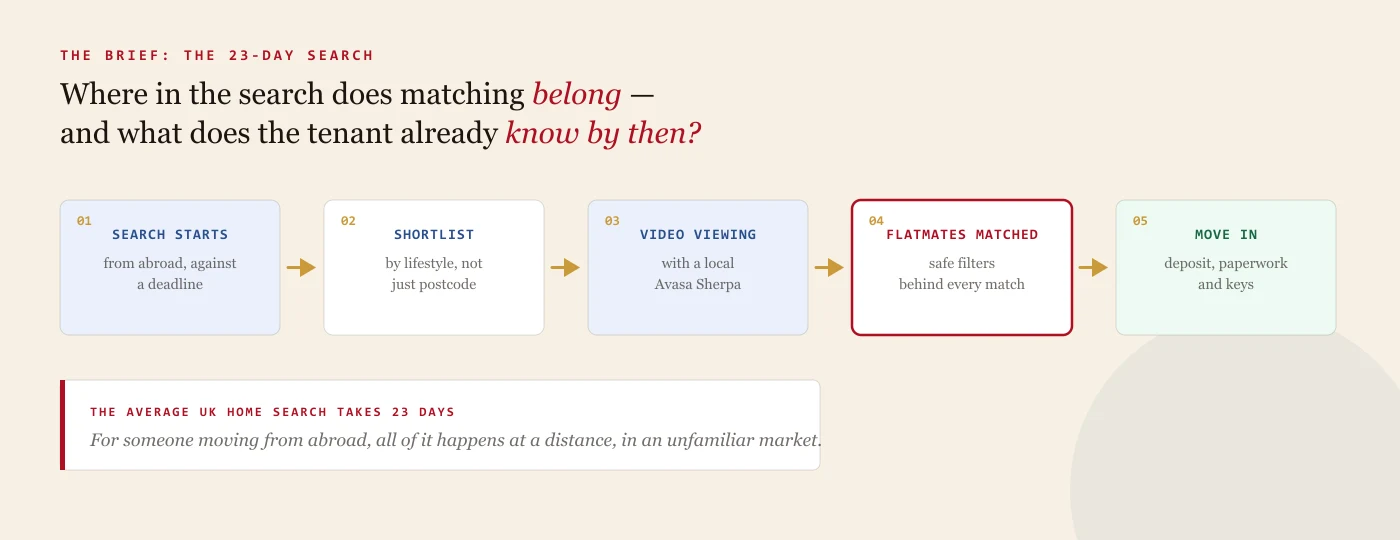
Renting in the UK is a broken process, and the brief puts a number on it: the average home search takes 23 days. For someone moving from abroad, all of that happens at a distance, in an unfamiliar market, usually against a deadline.
Avasa's premise is that a platform can sit on the tenant's side rather than the landlord's - matching properties to what a tenant actually needs, and putting a human alongside them from first search to move-in. Those humans are the Sherpas, Avasa's local rental experts. The distinctive features follow from that: searching by lifestyle requirement rather than postcode (how long you're willing to commute to a specific university, office or gym), viewings by video call so an overseas tenant doesn't have to fly in, and the whole rental process managed in one web app.
The specific problem handed to the students was a money problem experienced by the tenant. Students arriving to study in the UK have to cover monthly rent and an upfront deposit on top of course fees, and many respond by trying to find a group of people to rent with. Avasa wanted a tool that helped tenants find flatmates they genuinely match with - and, because Avasa is answerable to those tenants, filters that keep the matching safe.
“We aren't another real estate agency. Our objective is to find properties that match the needs of the tenants and be on their side if they need help at every step of the rental process.”
What Avasa asked for.
Design a flatmate-matching feature for the existing Avasa web app, so tenants who can't carry a whole rent and deposit alone can find people to move in with -- including the filters that make matching feel safe.
What the students worked within.
Who the design had to serve
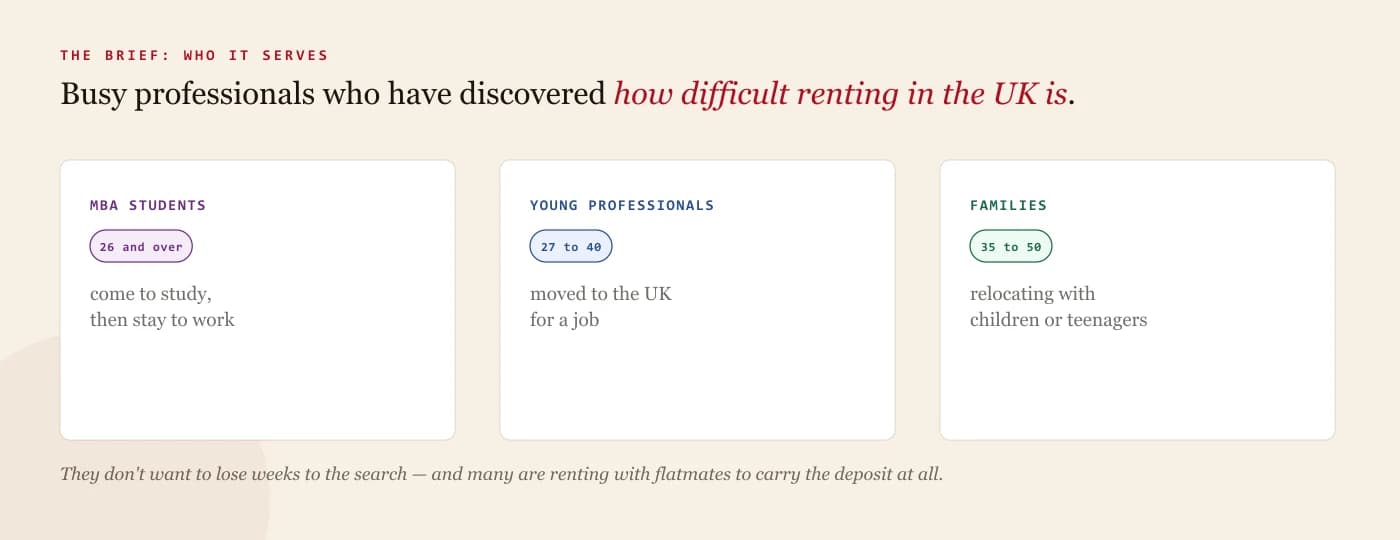
Busy professionals who have discovered how difficult renting in the UK is and don't want to lose weeks to it. Three groups: MBA students aged 26 and over who come to study and then stay for work; young professionals aged 27 to 40 who moved to the UK for a job; and families aged 35 to 50 relocating with children or teenagers because of work.
Constraints in the brief
- A new feature to be implemented in the existing website - not a standalone product, and not a redesign of everything around it.
- Work in Figma.
- Respect the current build. The brief asked the team to consider the limitations of the development Avasa already had, while leaving the door open to new capability where it genuinely improved the experience.
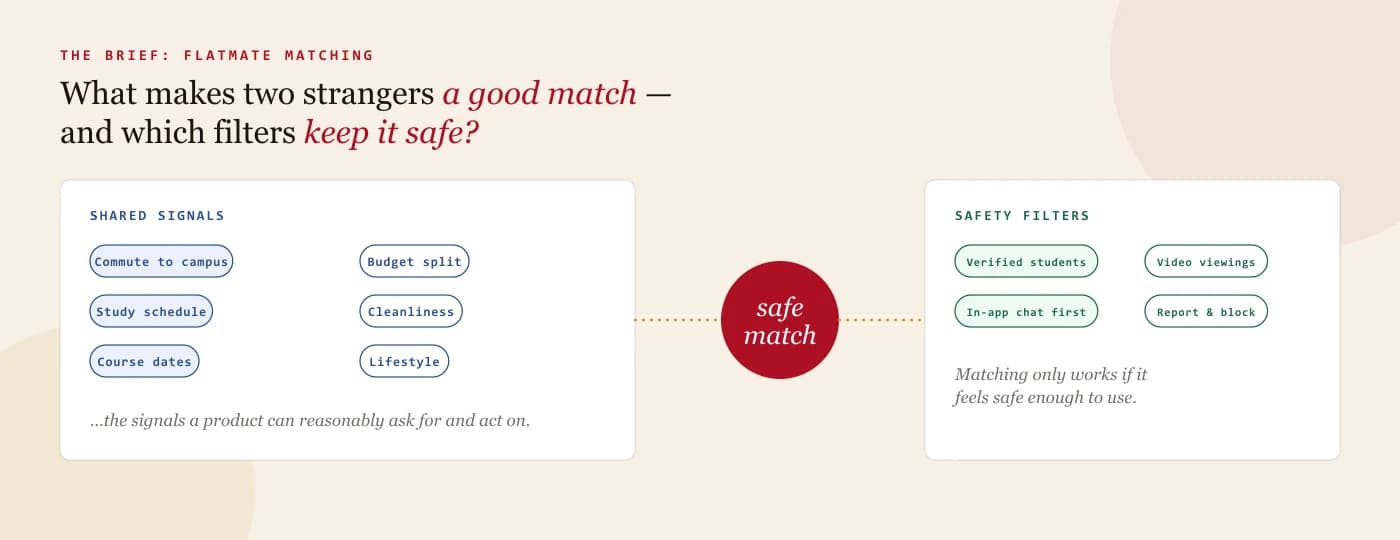
- Safety was a stated requirement, not an afterthought: any matching mechanism needed the right filters behind it.
What the team had to figure out.
No answers were supplied with the brief. These are the questions the students had to research, argue about and design their way through.
- What actually makes two strangers a good flatmate match - and which of those signals can a product reasonably ask for and act on?
- How do you design matching and filtering so that people feel safe enough to use it?
- How does flatmate matching slot into a rental journey that already includes lifestyle-based search, video viewings and a human Sherpa, without becoming a second product bolted on the side?
- What does this need to do for the outcomes Avasa measures - positive client feedback, more free consultations booked, and users on a plan that genuinely suits them?
- Where in the 23-day search does this feature belong, and what does the tenant already know by the time they reach it?
The brief, as a board.
No student presentation deck survives for this project. This board is drawn from the original client brief -- the problem and constraints the students took on -- rather than from student output.
Every cohort gets a real brief.
UX Academy courses are 100% live online, capped at 10 students, and built around a genuine client brief rather than a simulated exercise. Students work to the client’s real constraints and present their work back to the client — which is what turns a course project into a portfolio piece you can talk through in an interview.
Courses that cover this kind of work.
Want a brief like this on your CV?
Get the full curriculum and see how the client project runs.
Work on a real brief. Build your portfolio.
Speak to an advisor about whether this is a realistic move for you, or browse the courses to find your fit.