Is the course online or in-person?
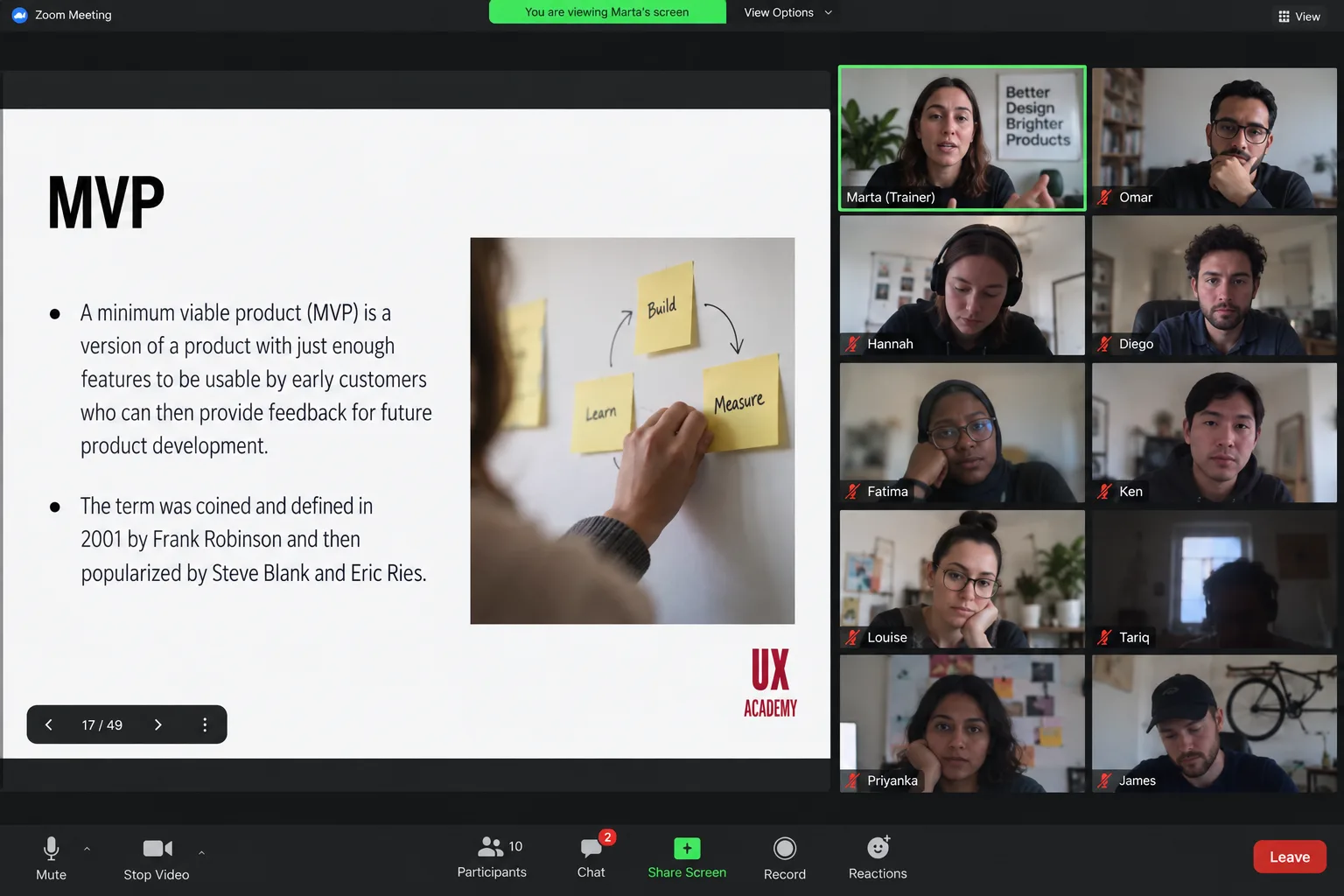
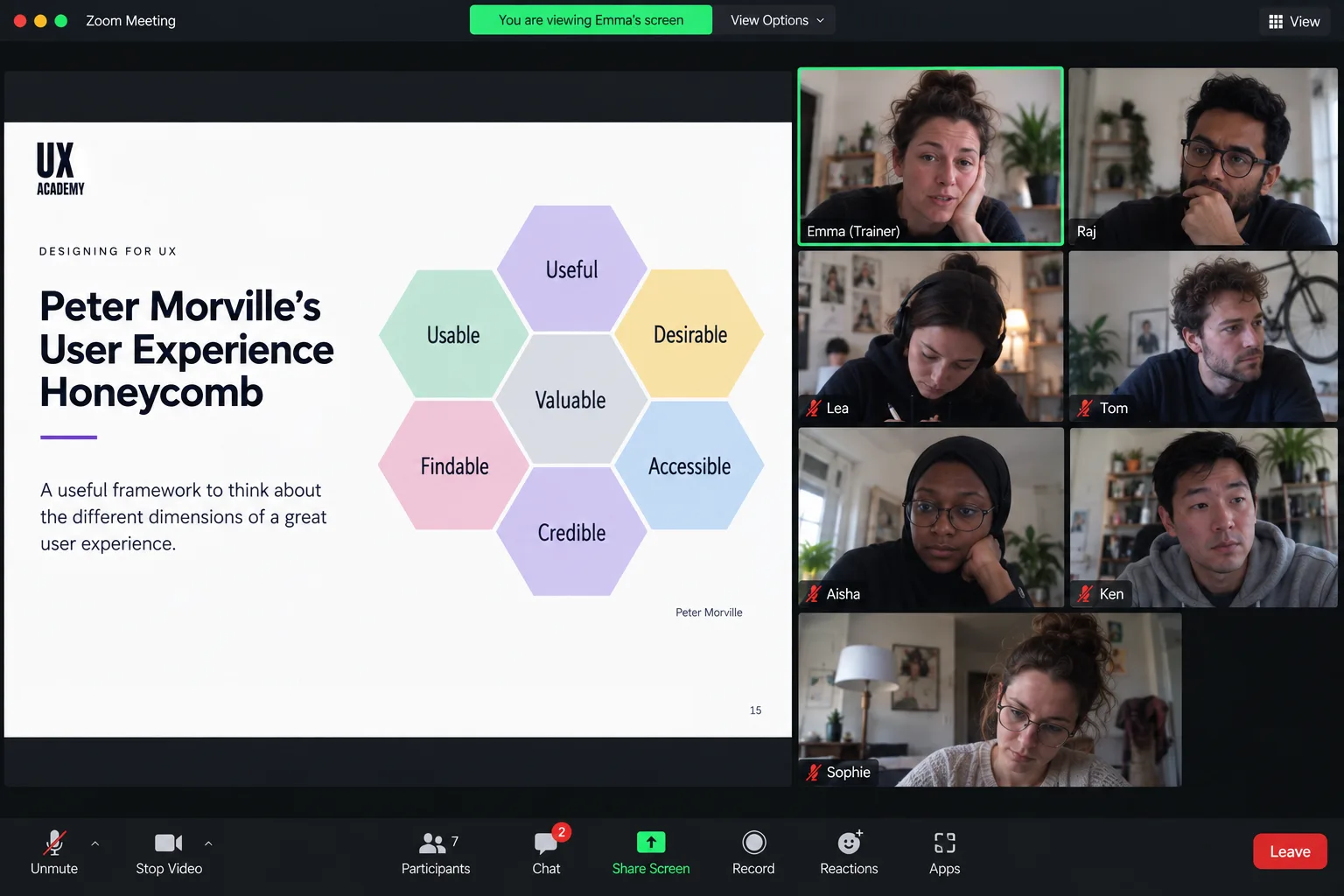
The course is 100% live online. You join small live classes over Zoom in the evening (6:00 to 8:30pm UK time) from anywhere in the UK or abroad; there's no in-person attendance and no commute. Every session is recorded, so you can catch up if you miss one.
Do I need design experience to join?
No. This course is built specifically for career changers with no prior design experience, and it stays open to complete beginners. If you have already done some free or self-paced UX learning, that's a genuine advantage rather than a requirement -- the course is intensive and practical, and people who arrive already comfortable with the basics tend to get more out of it. The only requirement is curiosity and the ability to commit to 8 weeks of evening sessions.
Why does a beginner course teach AI?
Because the UX design process hasn't changed: every step of it, from research to wireframes to testing, now involves AI. As a true beginner you never have to learn how it used to be done: you only learn how it's done today. The scarce skill is judging AI output, and that judgement comes from exactly the fundamentals this course teaches (knowing your target user, your business goal, and your user need), which is what lets you write a useful prompt and tell a good result from a bad one.
How much time will I need each week?
One live session per week (one evening, 6:00 to 8:30pm UK time) plus 3 to 4 hours of independent project work. Budget 5 to 6 hours per week total.
What tools will I use?
Figma is the primary design tool, and it's free. Maze or Useberry for usability testing; Notion for project organisation. No paid subscriptions required. UX Academy also has partnerships with design software companies, so you get free access to some paid tools while you study -- not every tool, but a genuine saving on the ones we have secured licences for.
What do I get when I graduate?
A certificate confirming you completed the Beginner UX (AI) Design course, a portfolio with a real client project case study, and continued access to the UX Academy community. The certificate confirms completion; it isn't an accredited qualification.
If the project is a team project, do I still get my own portfolio piece?
Yes. Your team of three or four shares one real client brief and divides up the research, but each person does their own design work and writes their own case study: what you decided, what you tested, what you'd do differently. The brief is shared; the portfolio piece is yours. It also ends with something most course projects can't give you - your team presents the work back to the actual client, and their reaction goes in the case study.
Is the work peer reviewed?
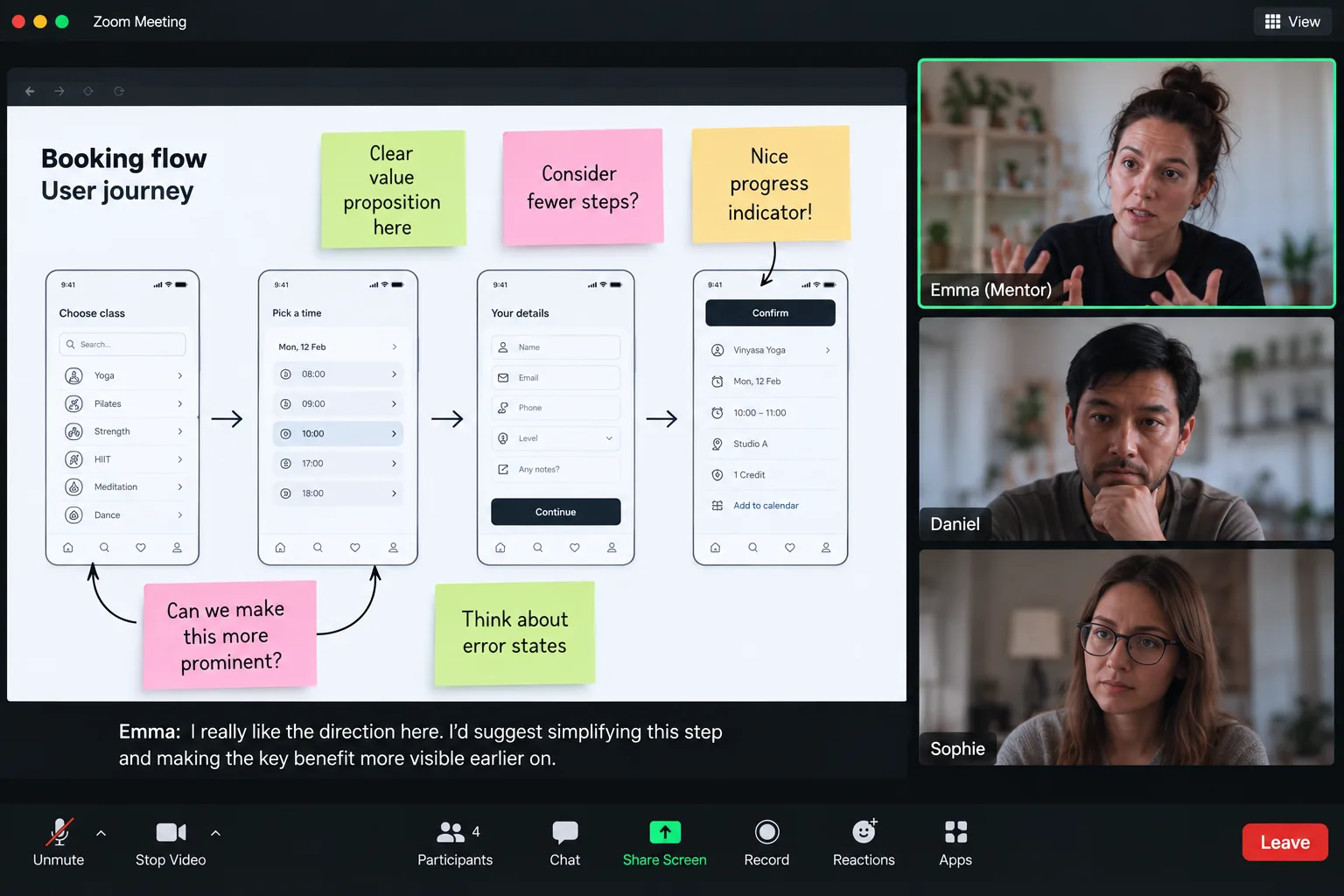
Yes, in two ways. Your project team reviews the work between sessions as the project moves, and the cohort shares work for review on Fridays. On top of that, your team has a 45-minute session with an industry mentor each week, arranged separately from the weekly class, and it's a different mentor every week. It's a team session rather than one to one, which is worth knowing if a dedicated personal mentor is what you're looking for.
Is the price going up?
The price depends on the cohort. The cohort starting Wednesday 14 October 2026 is £1,500, and the cohort starting Tuesday 12 January 2027 is £2,000. The £99 deposit is the same for both.
Is there a scholarship?
Yes. UX Academy offers a 30% scholarship for designers from underrepresented groups, including BIPOC, LGBTQ+, students with disabilities, and students with low income. Apply on the scholarship page.
What's your refund policy?
The £99 deposit is refundable within 14 days of booking. Cancel after that but before the course starts and the deposit is forfeited, though any balance you have paid is refunded in full. Once the course has started no refund is available, except at our discretion in exceptional circumstances.
I tried a self-paced course before and didn't finish. Will I cope with this one?
Probably better than you expect. Not finishing a self-paced course is usually a problem of accountability rather than ability - nobody noticed you had stopped. Here a named instructor sees your work every week, ten classmates notice when you go quiet, and a real client is expecting something real. Anything you covered before is an advantage: this is eight weeks and it moves fast, so turning up already comfortable in Figma means you spend that time on the thinking rather than on the tool.
How is this different from a self-paced course?
Every session is live: a named instructor, maximum 10 students. Real feedback on your work every week, not videos to watch at your own pace.
Is a UX Academy certificate recognised by employers?
Hiring managers at agencies and in-house UX teams consistently tell us the portfolio matters far more than the certificate provider. Your graduation from UX Academy includes a real client project case study built under a live brief - the kind of work that gets you interviews. Named graduates including Alice Cunico (now Senior UX Designer at Barclays) and Kanisha Mistry (now UX Design Lead at Zone) secured roles on the strength of that portfolio. The UX Academy certificate doesn't expire and is issued by Nomadic User Ltd, trading as UX Academy. We're transparent: we aren't accredited by a government body, and most employers don't require that for entry-level UX roles. What they look for is proof you can do the work - and that's exactly what the course delivers.
Can my employer pay for the course?
Yes. Send us your company's billing details, plus a PO number if your company uses one, and we'll invoice them directly. There's no deposit when an employer is paying. Book a call at myuxacademy.com/book-a-call/ or email hello@myuxacademy.com and we'll sort it.
I'm not sure I'm creative enough for UX design.
Most of our graduates said exactly this before starting. UX is less about visual creativity and more about curiosity and empathy: understanding why people struggle with things, then figuring out how to fix it. If you have ever rewritten a confusing email, reorganised a messy drawer, or explained something complicated simply, you're already thinking like a UX designer.
What if I fall behind or miss a session?
Every live session is recorded and available the same day. Life happens; we know that. If you miss something, you'll catch up. The weekly drop-in sessions exist specifically for this: come with questions, share your screen, get unstuck. No one gets left behind in a group of 10.
I have seen cheaper courses online. Why is this one different?
A cheaper course teaches you the same material. What it can't give you is a real client project, an instructor who knows your name, or a cohort that gives you feedback on your actual work. Those are the things employers notice in your portfolio, not which platform you studied on.